012 — “Fu-gee-la” | The Fugees × Breckenridge Rum Cask Finish
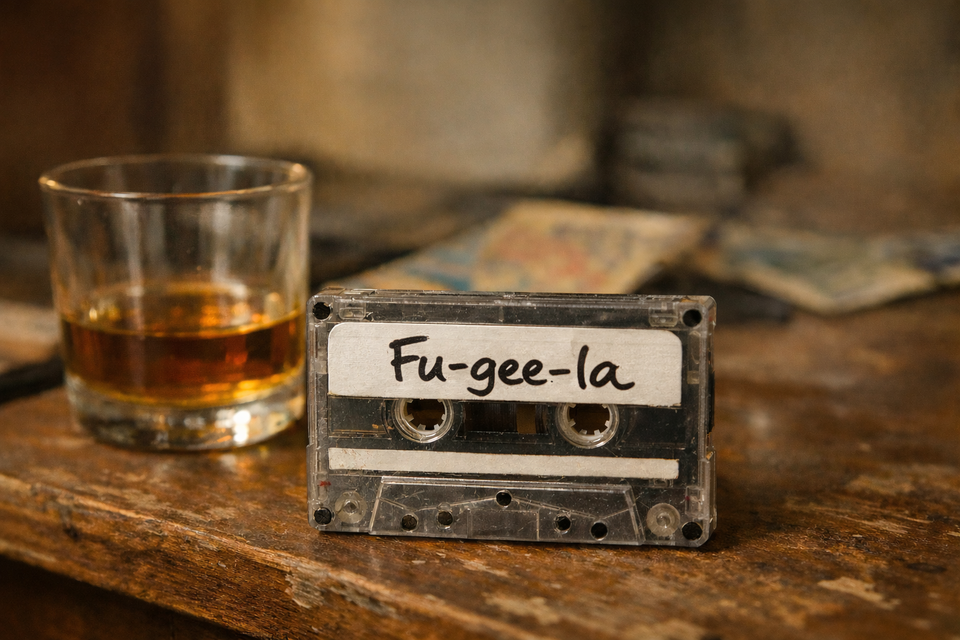
Pour slow. Press play.
Track — “Fu-gee-la” — The Fugees
Album: The Score (1996)
“Fu-gee-la” arrived as The Fugees completed their transition from underground fixtures into architects of something broader. The Score took shape across sessions in Caribbean and North American studios, with Wyclef Jean, Lauryn Hill, and Pras Michel moving between ideas and influences that reflected their own histories. The beat begins lean and forward, driven by a loop sourced from a salsa groove that presses rhythm into motion before the drums fully enter. That loop gives the track its edge, rooted in pulse rather than polish. From the first measure, the sound feels restless and tuned to motion.
The vocal entries cascade with distinct energy. Wyclef opens with an accent shaped by his Haitian upbringing and a cadence that blends melody and rhythm without exaggeration. Pras follows with deliberate timing, his delivery compact and direct, leaning into rhythmic phrasing that complements rather than overshadows the beat. Lauryn Hill arrives with exact control, each syllable articulated with clarity that defines presence without embellishment. The movement between voices feels intentional, a shared space occupied with awareness of what came moments before.
The lyrics revolve around movement and identity, recurring reflections on being en route, navigating lives pulled between roots and routes out. The title itself references the condition of displaced peoples, a theme woven into the narrative fabric of The Score. This track stands as a moment of grounded assertion within an album shaped by cultural intersections. Its pulse and voice come from practice and repetition, from ciphers and late nights in studios working toward cohesion.
“Fu-gee-la” carries its significance not through spectacle but through confidence in its own framework. It became a pivot in The Fugees’ catalog, recognized not for accommodating mainstream expectation but for asserting direction with clarity. That sense of movement leads naturally into the pour.
Pour — Breckenridge Rum Cask Finish
Distillery: Breckenridge Distillery
Proof: 90 (45% ABV)
Breckenridge Rum Cask Finish begins as a bourbon aged in new American oak barrels. After initial maturation, it returns to barrel for a secondary rest in rum casks sourced from Caribbean producers. This finishing period unfolds quietly, allowing the spirit to absorb subtle notes carried by the rum wood before returning to bottle. The process does not overwhelm the base bourbon. Instead, it adds context, another layer that sits alongside the original character.
On the nose, brown sugar and warm grain lead, tempered by a faint echo of tropical fruit and molasses drawn from the rum cask. Vanilla sits in the background, joined by seasoned oak that moves across the senses without urgency. The palate opens with caramel and toasted barley. Fruit notes shaped by the rum influence follow, folded into the sip without abrasion. A thread of spice runs through the sequence, not insistent, but steady enough to guide the experience. The texture remains smooth and measured, each element arriving without abrupt shift.
The finish carries a gentle warmth. Oak and sweetness trail behind in sequence, shading into hints of dried fruit that linger quietly. The rum cask influence remains present as an accent rather than a headline, another voice completing the narrative introduced by the base bourbon.
Breckenridge’s approach reflects patience in method and clarity of purpose. The pour moves with steadiness. Its character is built through interaction between barrels and time, not through force or extremes.
Final Bar
“Fu-gee-la,” in its cadence and structure, reflects movement that is intentional and self-aware. The Fugees move together in a way that allows each voice to remain distinct while contributing to a unified whole. Their choices shape sound in service of craft.
Breckenridge Rum Cask Finish reveals itself in the same manner. It layers influence without losing its foundation. The track and the pour share a sense of disciplined progression and careful interplay between elements. Neither seeks spectacle. Both reveal complexity through clarity, a collection of parts working in sequence toward unity.
Want More
- Explore The Score and the full catalog from The Fugees.
- Learn more about Breckenridge Rum Cask Finish and the work of Breckenridge Distillery.
- Visit The Warm-Up for tasting terms and pour structure.